Feb 14, 2025
One Exporter to Rule Them All: Exploring Camunda Exporter
Achieve a more streamlined architecture and better performance and stability with the new Camunda Exporter.
Author
Feb 14, 2025
Achieve a more streamlined architecture and better performance and stability with the new Camunda Exporter.
Mar 19, 2024
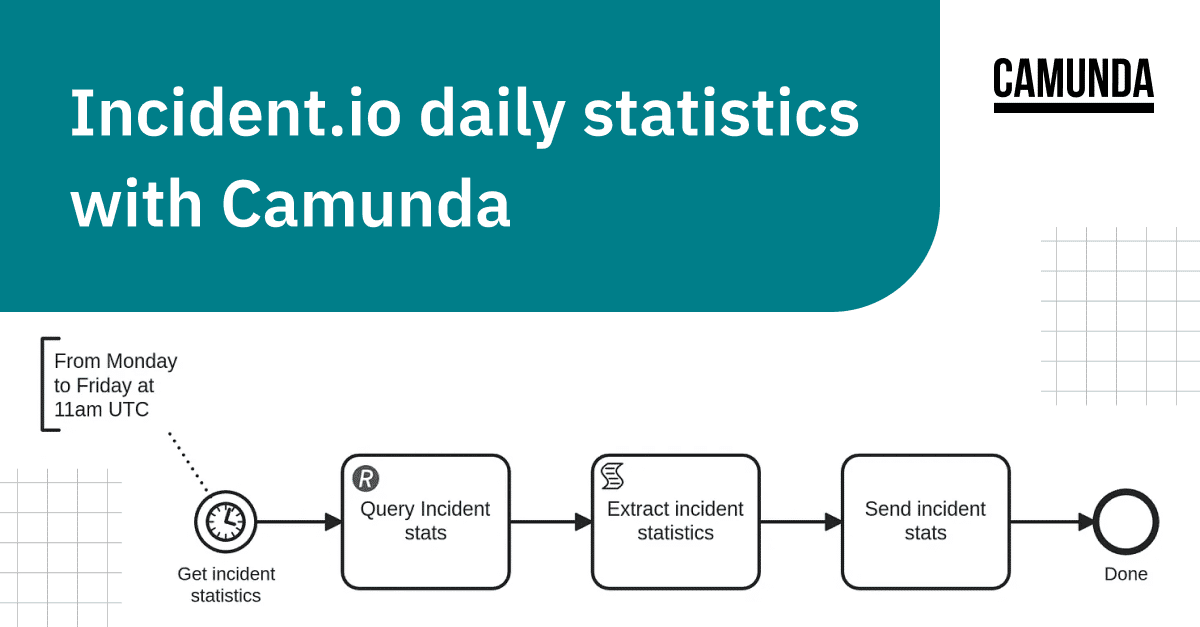
In this step-by-step tutorial, learn how you can completely automate incident.io daily statistics using Camunda.
Feb 5, 2024
2023 was quite a year for Zeebe, and the team has been hard at work improving performance. Get an overview of all the latest technical improvements.
Aug 1, 2023
Take a closer look at how you can automate and orchestrate chaos experiments using Zeebe.
Mar 3, 2023
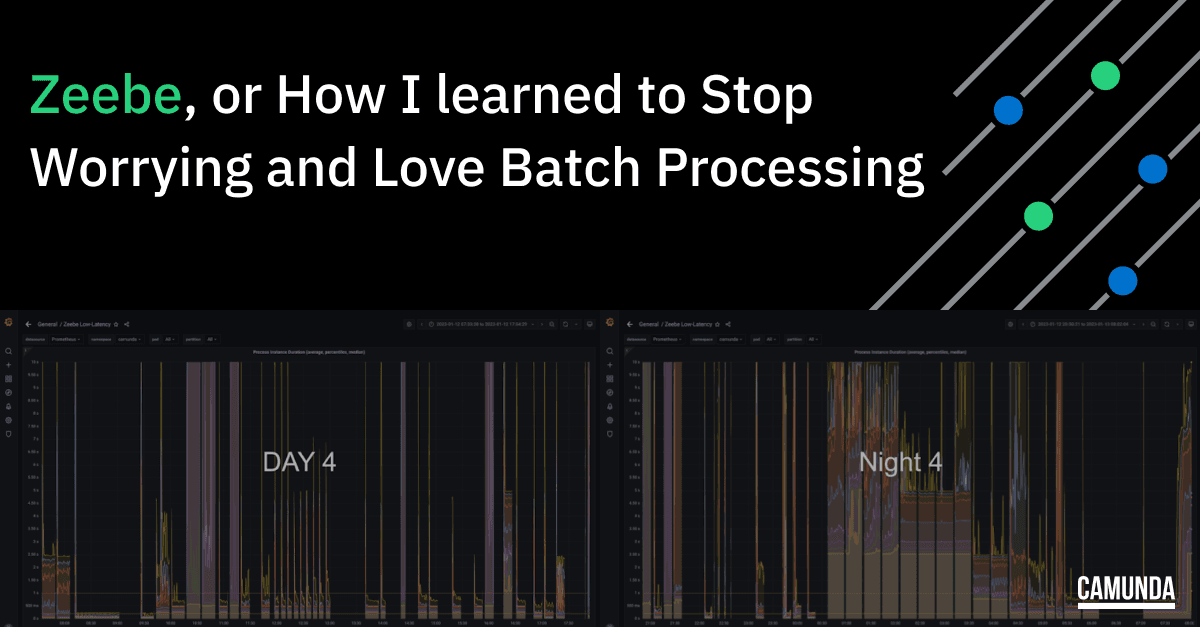
Learn how we successfully reduced Zeebe’s process execution latency with batch processing during a recent hackday.
Sep 27, 2022
During Summer Hackdays 2022, I worked on a project called “Zeebe chaos” (zbchaos), a fault injection command-line interface (CLI) tool. This allows us engineers to more easily run chaos experiments against Zeebe, build up confidence in the system’s capabilities, and discover potential weaknesses. Requirements To understand this blog post, it is useful to have a certain understanding of Kubernetes and Zeebe itself. Summer Hackdays: Hackdays are a regular event at Camunda, where people from different departments (engineering, consulting, DevRel, etc.) work together on new ideas, pet projects, and more. Check out previous Summer Hackdays here: Summer Hackdays 2020 Summer Hackdays 2019 Zeebe chaos CLI Working on the Zeebe project is not only about engineering a distributed system or a process…
Mar 30, 2022
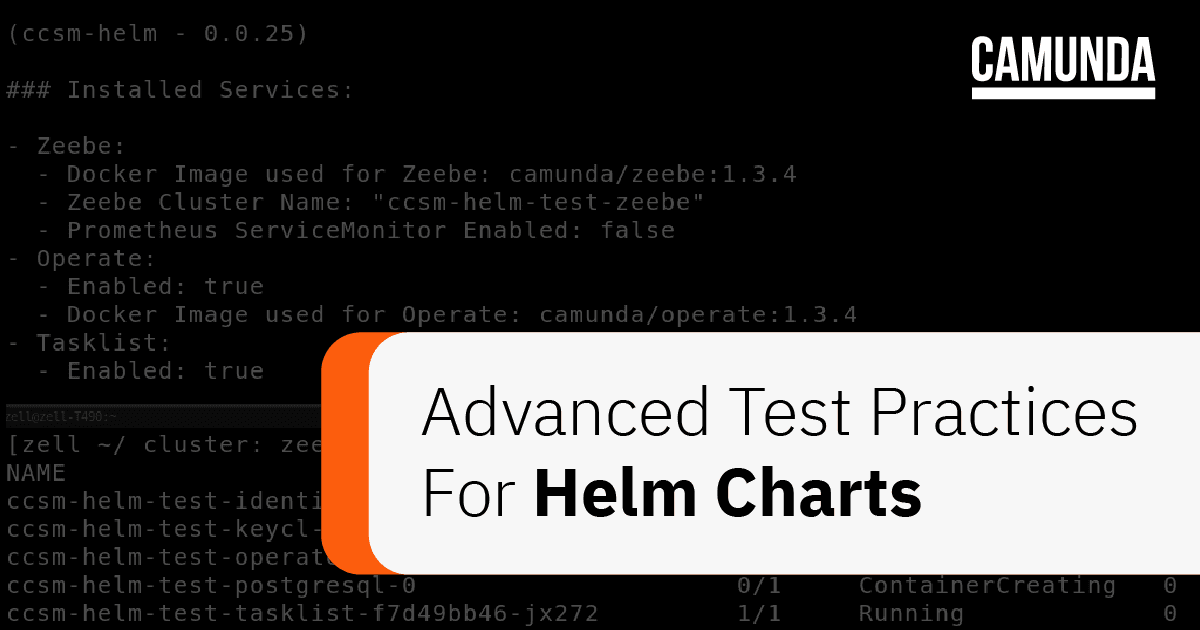
Dive into the detailed learnings and experiences from our journey to find a sufficient way to write automated tests for Helm charts.
Feb 24, 2017
Introduction On the new version of the Camunda Engine Platform (7.7) the user passwords, which are stored in the database, are by default hashed with a SHA-2 family algorithm. Before the passwords are hashed, they are concated with an individual random generated salt for each user, to prevent dictionary and rainbow table attacks. For someone who needs a more secure hashing algorithm Camunda introduce a new API, which allows to customize and exchange the default hashing algorithm. In this blog post I will present this customization and will use argon2 as hashing algorithm. Argon2 is a password-hashing function 1, which is considered as state of the art and also won the Password Hashing Competition at the end of 2015 2….
Oct 14, 2016
Camunda 7.6.0-alpha5 is here and it is packed with new features. The highlights are: Implementation of the BPMN Conditional Event Batch Cancellation of Historic Process Instances Huge performance improvements due to caching of Scripting Engines and Compiled Scripts in DMN Engine Expressions in Signal and Message Event Names Cockpit Usability Improvements Pluggable Deployment Cache 10 Bug Fixes List of known Issues The complete release notes are available in Jira. You can Download Camunda For Free or Run it with Docker.